
Sandblasting Stencil Tips: Get Pro-Level Results on Stone without Burning Edges
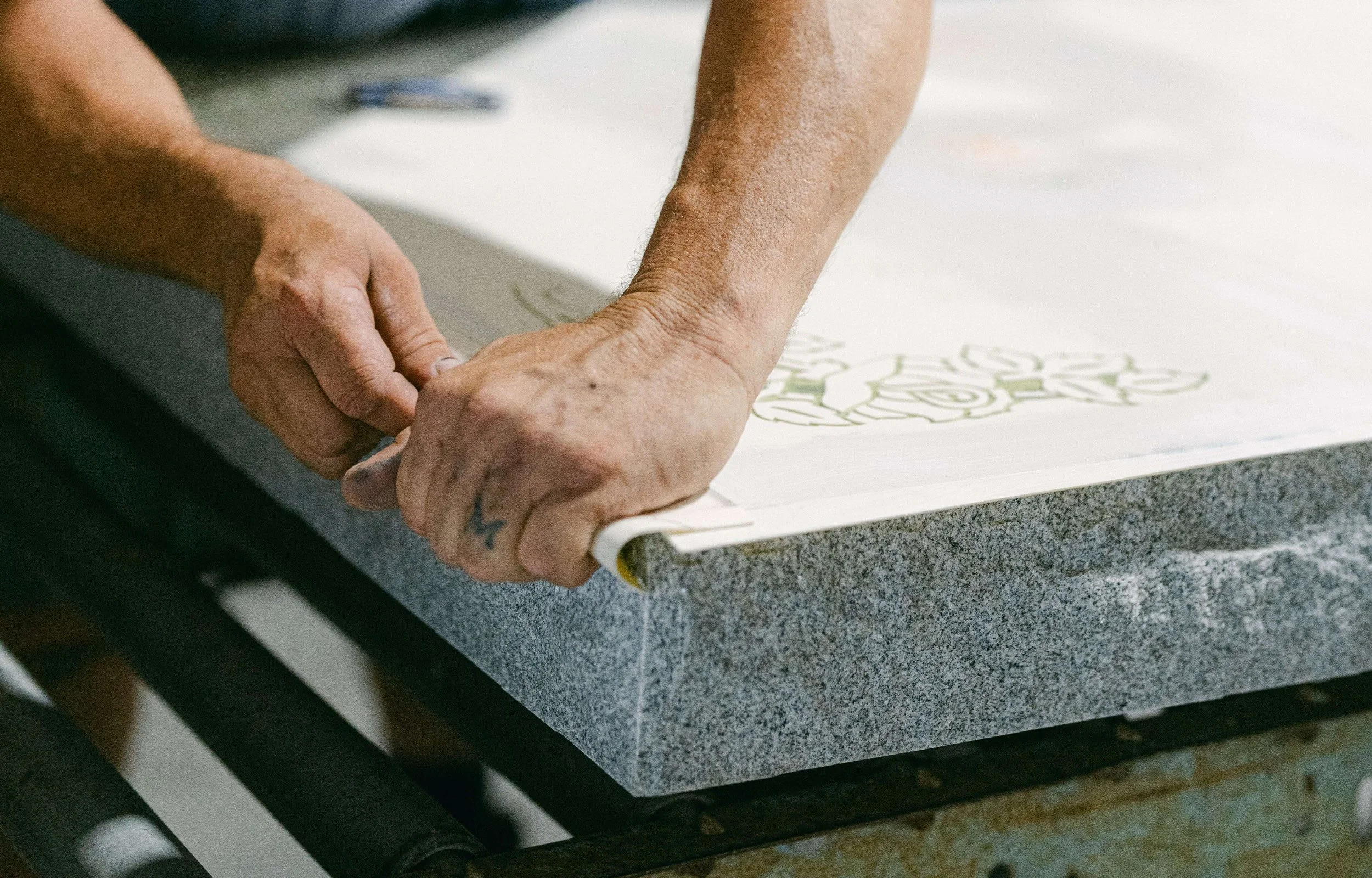
The hard truth for your engraving business is that it is entirely outcome based. Your clients don’t really care about the trials and tribulations of your project; their main concern is how everything looks when you give them the finished product. This bottom-line approach to your business means it’s essential to keep every step of the engraving and sandblasting process error-free so you can meet deadlines without wasting resources. A key step in this process is having professional-grade sandblasting stencils.
Burning Edges – A Sandblaster’s Nightmare
When it comes to sandblasting on stone substrates, a sandblasting stencil is your main tool for creating crisp and clean designs. Using stencils is a highly skilled part of the process as there are many ways you can make mistakes that will set your project back or even ruin the entire design. There are issues finding the right balance of adhesion, getting the right level of thickness and choosing a flexible stencil roll that will fit and adapt to your stone surface. However, there is one error that is deadly to your project: burning edges.
Burning edges refers to those times where you erode the edges of your stencil unintentionally, either through using the wrong sandblasting media, too high pressure or using a poor quality sandblasting stencil. If the edges of your stencil start to break down, you’ll see blurred lines where you’re expecting a crisp finish, and your overall design will look distorted and unprofessional.
Sandblasting Stencil Tips to Avoid Burning Edges
It may seem obvious to say, but the number one way to avoid burning edges on your next stone based engraving project is to have a high-quality sandblasting stencil. A simple upgrade in material quality will take care of the leading causes of burning edges such as poor adhesion or erosion under pressure. Once you’ve got the right stencil roll for your project, there are some further simple steps to keep your design looking crisp and clear.
Precision cutting and weeding
There should be a sandblasting version of the old adage “measure twice, cut once” that sounds like “check twice, cut once”. Once you’ve got your design sketched or printed on the stencil roll, you need to double check that everything is where it should be, as once you start cutting the image, it’s hard to go back and fix your mistake. Ragged edges and stretched bridges are some of the leading causes of stencil failure which can lead to burnt edges, so it’s important to have sharp plotting blades and move at a slow enough speed to get a precision line. For small and intricate projects, your weeding tools may need an upgrade so you get cleaner blasted edges.
Seal the edges
Unless this is your first foray in the world of sandblasting engraving, you know the importance of a tight seal on your stencil. A quick and easy option is to run a firm roller across the entire project to make sure that all the adhesive has taken and that there are no gaps between the stencil and your stone substrate. Many sandblasting professionals will also heat-set or post press the edges as far as the thickness of the stencil allows. These techniques help to hold the stencil in place and protect the edges during extended periods of sandblasting.
Picking the right level of adhesion
Just like there is a wide variety in the characteristics of different stone types, there is a wide variety in the types of stencil liners available for your project. The key here is to know how your target stone substrate interacts with sandblasting. At a simple level, smooth and polished stone surfaces usually require a standard tack adhesive (regardless of the type of stone), such as what is included with our new UB2 double liner stencil. On the other hand, rougher and unfinished surfaces need an aggressive level of adhesion to make sure you get a full seal with no possibility of undercutting, blowouts or burnt edges, which is where our 721 series stencils come in.
Get Professional Advice
At U-Blast, there’s no sandblasting scenario that we haven’t seen before, so our team of stencil experts will be able to guide you through our product inventory to match you with the right sandblasting stencil for your stone project. Each of our stencil rolls comes with a rating for adhesion, flexibility, and thickness, so you can get an at-a-glance feel for how each of our professional-grade stencils will work with your project. Then just pick up the phone and tap into our decades of sandblasting experience so you never have to worry about burning edges again.