
Why the Right Stencil for Sandblasting Saves You Hours (and Headaches)
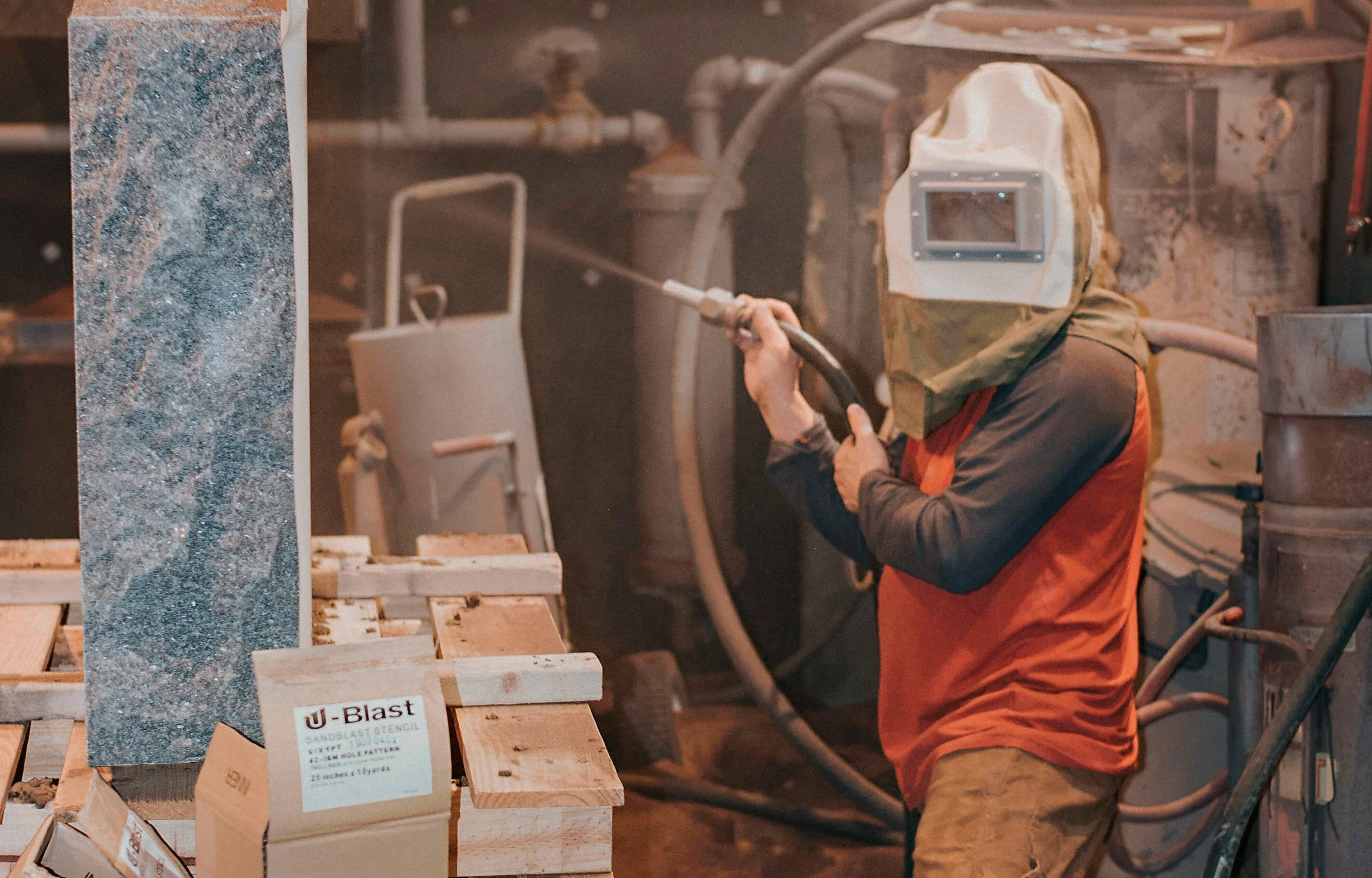
Anyone who isn’t in the sandblasting field seems to carry the misconception that sandblasting is an inaccurate method of engraving. The whole process sounds like it’s more spray & hope than a detailed set of steps that give you a high degree of control over your final design. Perhaps it's the word “blasting” that makes it feel this way, while the truth is completely the opposite. Of course, each sandblaster has their own tricks for crisp lines and fine details: but they all know a great sandblasting stencil is a great place to start.
Why You Need the Right Stencil
Sandblasting is an unforgiving art form. It’s highly subtractive, meaning that you’re spending all your time removing pieces of your substrate material, and you can never undo a mistake. This means that having the right sandblasting stencil is key to save you hours and headaches. The right stencil will help you pick out all the intricate details of your client’s design and allow you to engrave each part to the desired depth without fear of slippage or distortion. A high quality sandblasting stencil also allows you to reuse your designs which saves you time in not having to reprint and repick for each sandblasting session.
Features of a High Quality Sandblasting Stencil
As with any part of your engraving setup, there’s a wide range of stencil rolls out there, and knowing the features to look for will help you narrow down your search to get the right stencil for your sandblasting project at a price that fits your budget. Here’s some of the important questions to ask about as you’re shopping for your new sandblasting stencil supplier:
What material is it best suited for? – above all, this is the most important factor that will dictate which sandblasting stencil you end up choosing. If you’re working with a heavy duty substrate like granite or concrete, you need a thicker stencil as you’ll be using a more heavy duty steel shot for extended periods of time, and your stencil needs to be thicker to stand up to the pressure. On the other end, if you’re working with something more fragile like glass, you need a thinner stencil that will peel off easily and also be easier to pick and weed out more complex designs.
How flexible is it? – flexibility is a key feature of all sandblasting stencil rolls, and it’s not always beneficial to have a highly flexible stencil. For example, if you’re sandblasting a larger area like a granite monument or gravestone, you need a fairly stiff sandblasting stencil that will keep its shape throughout the entire sandblasting stencil. You also want stiffness if your internal design has lots of gaps and holes so that your stencil retains the patterns throughout. Alternatively, you need a high degree of flexibility on curved and uneven surfaces so that your design looks perfect all the way round. Highly flexible stencil rolls are also well suited to work with less common shot media like glass beads and plastic media, but as always, what you need depends on the project in front of you.
How much adhesive does it require? – the final piece of the puzzle when it comes to finding the right sandblasting stencil for your project is how much additional adhesive you’ll need. An increasing number of stencil rolls now come as self-adhesive which takes the guess work out of the equation up to a certain point. A higher level of tack is essential for bumpy and porous surfaces where you’ll need your stencil to be held tight to prevent movement, while a lower level of adhesion is required anywhere that you’re worried about damaging the substrate when you come to peel the stencil away.
Why it Pays to Work with U-Blast
Here at U-Blast, we have decades of experience helping our loyal customers to find the right sandblasting stencil for each project. To help with the decision making process, we list all of our stencils lines on our website, and rate each one on the three different essential features: adhesion, flexibility and thickness. What that means is that you’ll be instantly able to see the difference between say our heavy duty 732 series, which is designed for tough corners and rough surfaces and our fresh UB2 line which you’ll want for stone and smooth surfaces. Our team of sandblasting stencil experts are also available via phone and email to help match you with the right stencil to save you time and headaches.